Quick answer
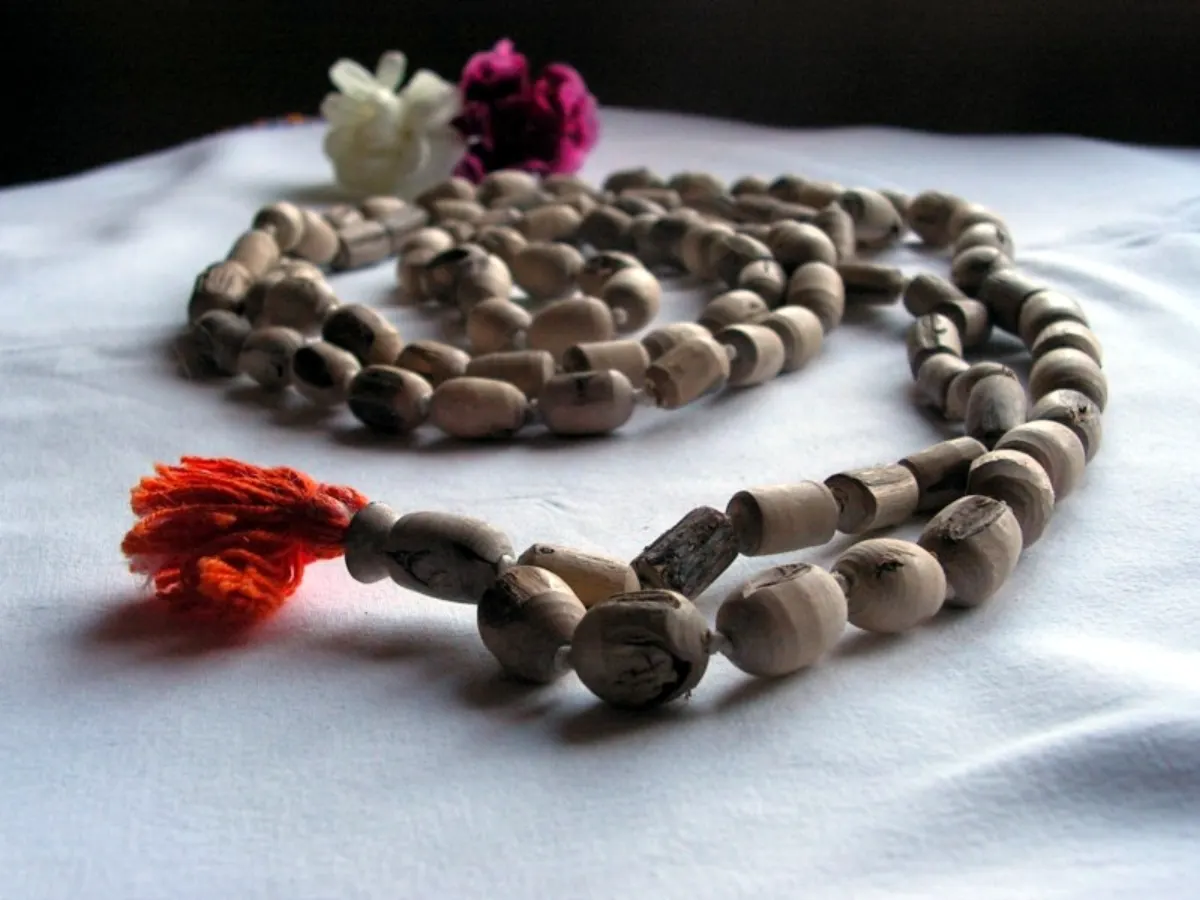
The sumeru is the 109th bead of a japa mala, larger than the others and usually finished with a tassel. It is not counted. You begin on the bead beside it, and when you return to it after 108, you turn the mala and chant the next round the other way instead of crossing it.
सुमेरुWhy it is called sumeru
Sumeru is another name for Mount Meru, the five-peaked mountain at the centre of the universe in Hindu, Jain and Buddhist cosmology, the centre of every physical and spiritual world. Many temples, Angkor Wat among them, are built as images of it. On a mala, the sumeru is that summit: the point every round climbs towards and turns back from. It is also called the guru bead, the mother bead, or simply the meru.
Why you never cross it
The custom, kept in the Hindu tradition and some Buddhist ones, is simple: the guru bead is not used for counting, and a round begins and ends on the beads beside it, as in how to do japa with a mala. When you have chanted more than one round, you do not move your fingers across the sumeru. You turn the mala around, so the bead you finished on becomes the first bead of the next round, and you go back the way you came.
There is a practical gift in this as well as a reverent one. Because the sumeru is larger, your thumb finds it without looking. A round ends by touch, not by counting, so the mind can stay with the mantra all the way to 108.
The parts you may not have noticed
The tassel. It hangs from the sumeru, marking the guru bead clearly. On Japanese malas, tassels often carry small counter beads, said to stand for the ten perfections, the paramitas.
Knots between beads. Many malas are knotted after every bead. Each bead then sits apart under the thumb, and a broken string loses one bead instead of all of them.
Marker beads. Some malas carry three smaller beads that, with the sumeru, divide the 108 into four sections of 27. They let you feel how far through a round you are. With them, the beads number 111 rather than 108, not counting the guru bead.
Beads that do not count. Some malas have extra beads hanging from the sumeru. They may carry meaning, three for the Buddhist Triple Gem for example, but they are never used to count.
How the Tibetans count to a lakh
Tibetan malas show how far the idea of counting by touch can go. Two short cords of ten small beads each hang from the main string. After each round of 108, you slide up one bead on the first cord. After ten rounds, 1,080 repetitions, you raise one bead on the second cord and reset the first. When the second cord is full at 10,800, a small metal charm called a bhum counter, from the Tibetan for a hundred thousand, moves one space along the main string. Moved steadily in one direction, it can track about 1.2 million repetitions, all by feel.
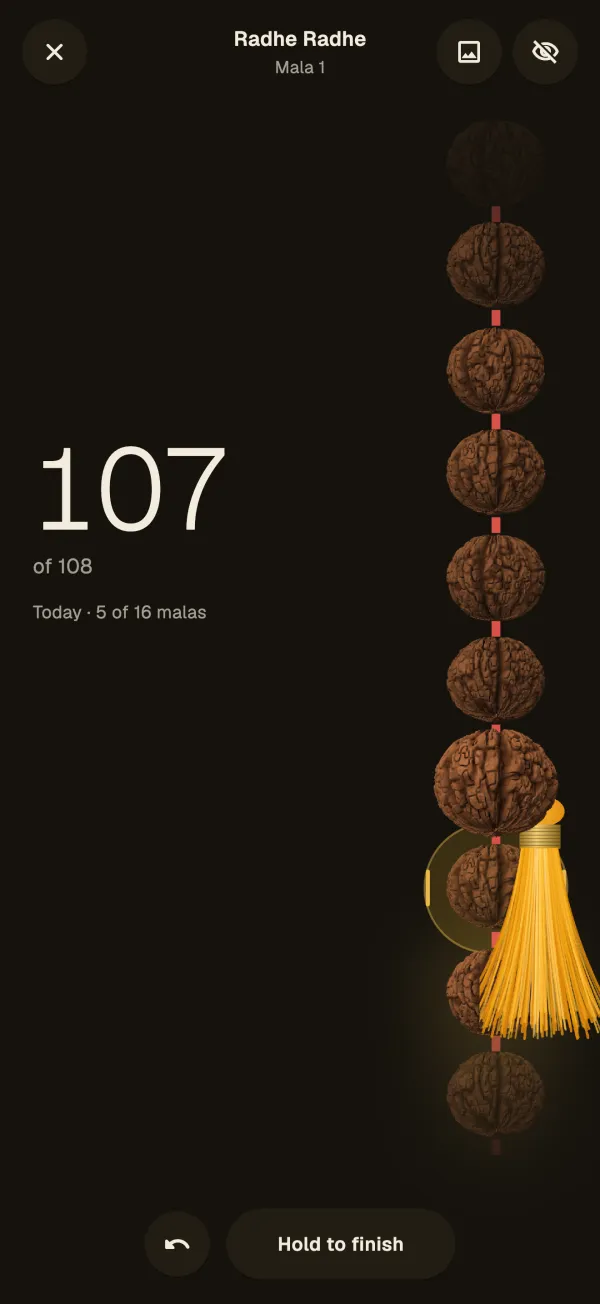
It is the same problem every long sankalpa faces: how to keep an exact count of a lakh or more without thinking about the count. Sava lakh jaap covers the arithmetic, and the online japa counter puts the sumeru at the top of its ring.
Frequently asked questions
Is the sumeru bead counted?
No. It is the 109th bead, and counting begins and ends on the beads beside it.
What happens if I cross the sumeru by mistake?
Turn the mala and carry on from where you are. If your tradition asks for something more, your teacher will say so.
Why are some malas 111 beads?
Some carry three marker beads that, with the sumeru, divide the 108 into quarters of 27. With them, there are 111 beads besides the guru bead.
What if my mala has no sumeru?
Mark a start bead with a knot or a different bead, or count 108 and stop. The sumeru is a help, not a requirement.
Sources
Begin your next mala.
Japo is a japa counter that feels like the real thing. Pull a bead with your thumb, feel a soft tick, and pick up exactly where you stopped. Counting, history and goals are free.