Quick answer
The two best-known malas are rudraksha, the seed of the Elaeocarpus tree, sacred to Shiva, and tulsi, the wood of holy basil, worn by Vaishnavas. Sphatik malas are clear quartz crystal; chandan malas are sandalwood; rakta chandan is red sandalwood; kamal gatta malas are lotus seeds. Your tradition, more than the material, decides which is right for you.
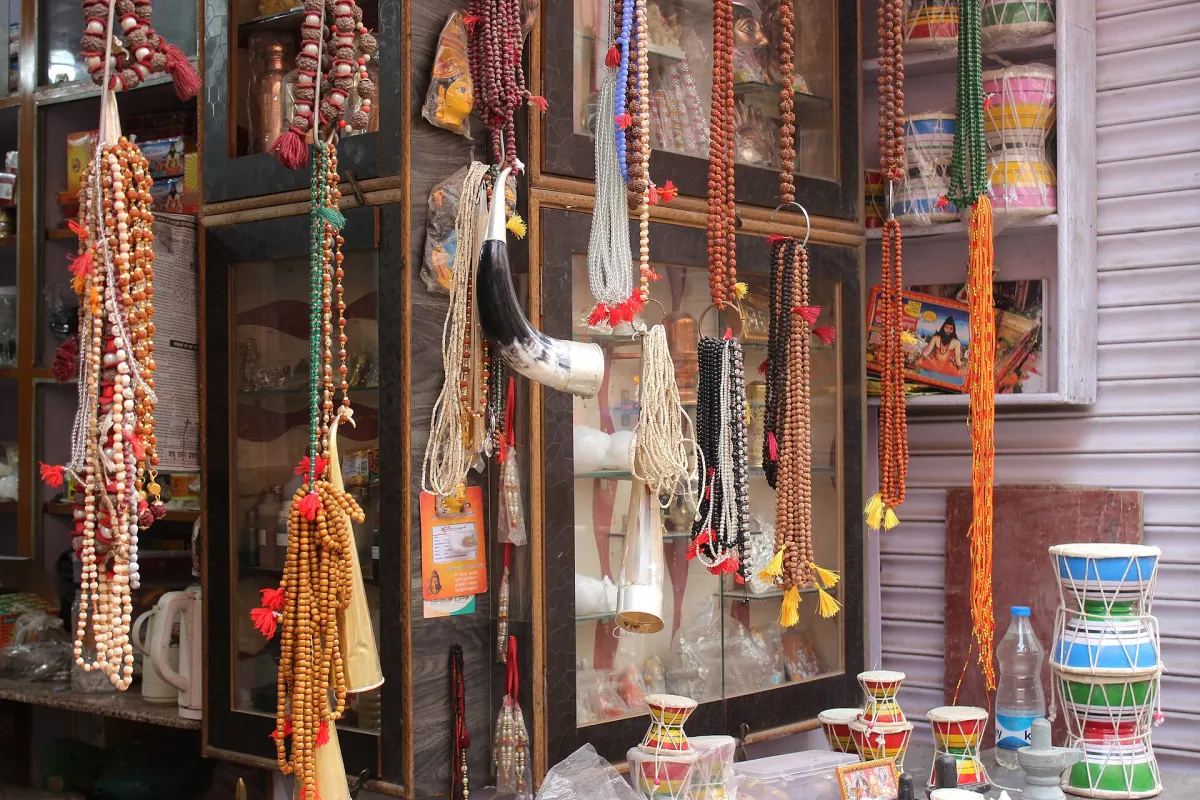
Walk past any mala stall near a temple and you will see a dozen materials hanging side by side. They are not interchangeable decorations. Most carry an association with a deity or a tradition, and a few carry practical lessons too.
रुद्राक्षRudraksha: the eye of Shiva
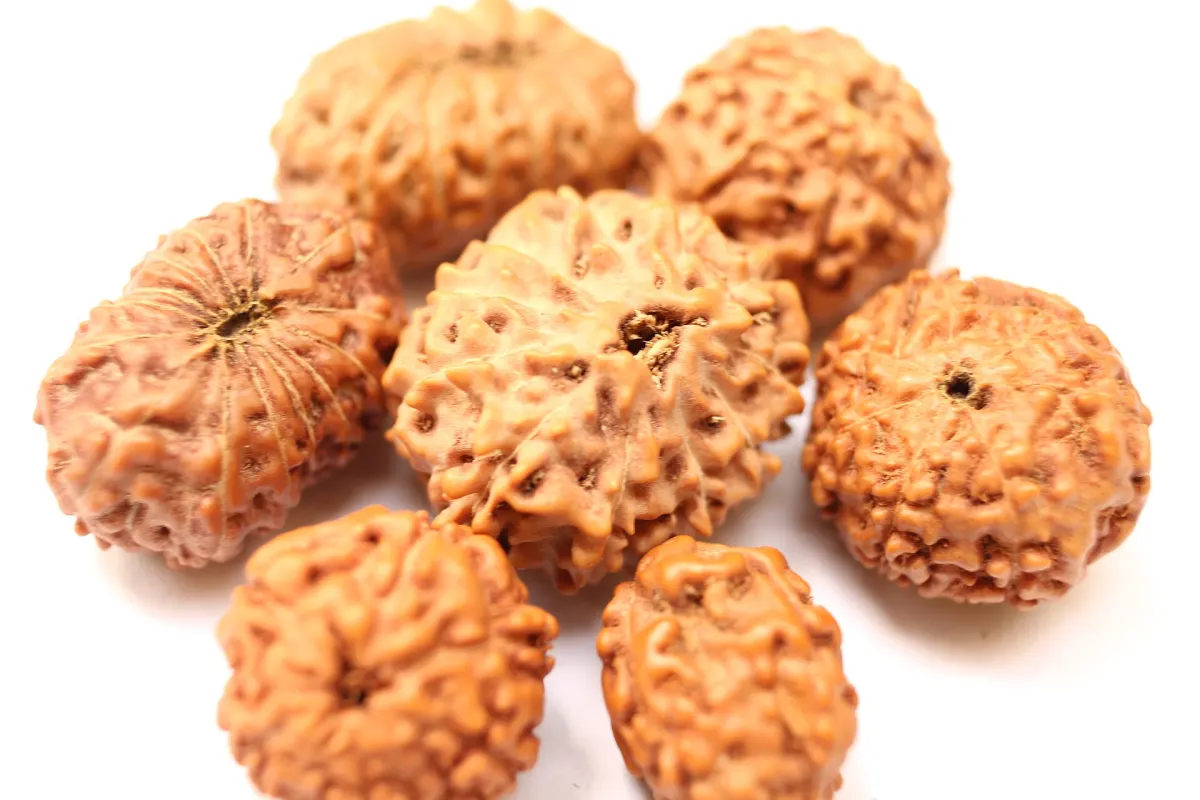
Rudraksha joins Rudra, a name of Shiva, and aksha, eye. The beads are the dried stones of the rudraksha tree, Elaeocarpus ganitrus, which grows from the foothills of the Himalayas through Nepal and South and Southeast Asia. Few people who wear them have seen them as they grow: when ripe, each stone sits inside a blue fruit, which is why rudraksha are sometimes called blueberry beads.
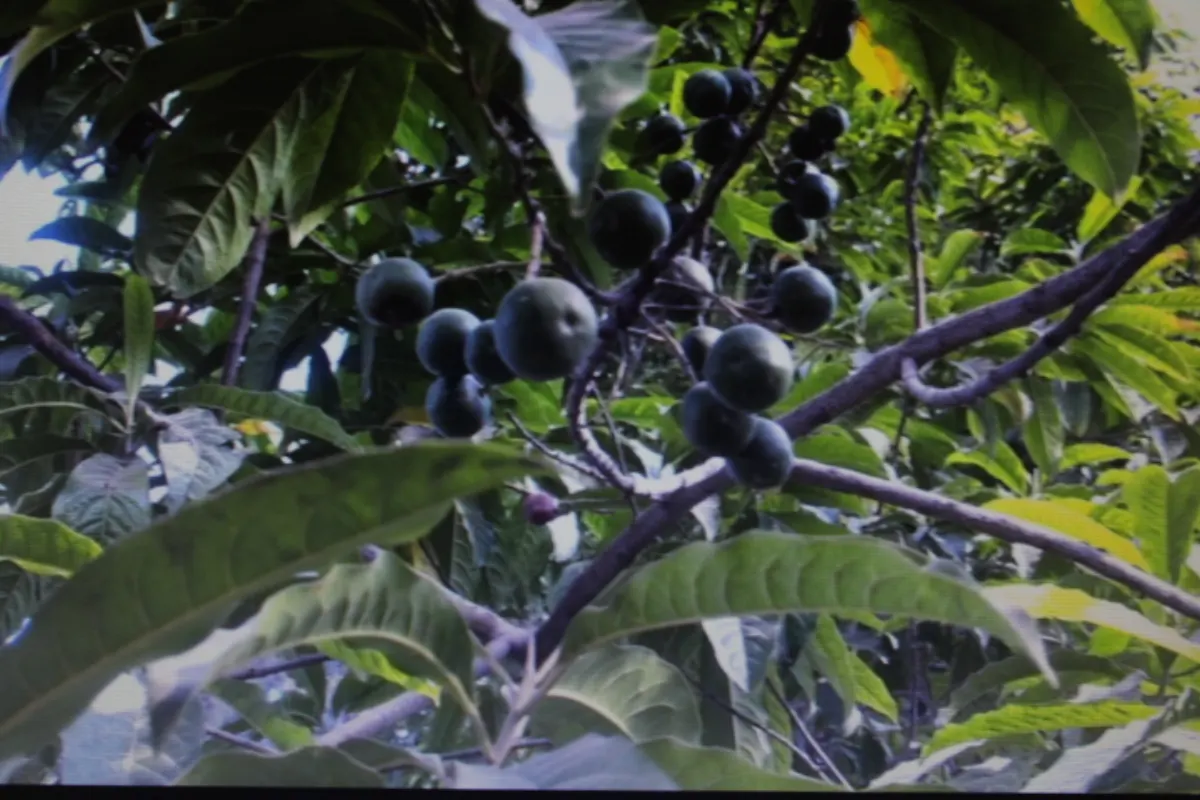
Few people who wear rudraksha have ever seen it grow, inside a fruit as blue as a berry.
The Rudrakshajabala Upanishad calls rudraksha the tears of Shiva and says they should be worn by his devotees; the Devi Bhagavata Purana explains how to string a rudraksha garland. They are the natural mala for Om Namah Shivaya and the Mahamrityunjaya mantra.
Each rudraksha is divided by clefts into faces, mukhi. Most have between 1 and 21, and a very few more. Some people link the number of faces to a particular deity, and beads with rare counts are valued, and priced, accordingly. A japa mala needs no rare beads: the mala in the photo at the top of the 108 beads guide is strung from ordinary five-faced ones.
तुलसीTulsi: worn around the neck
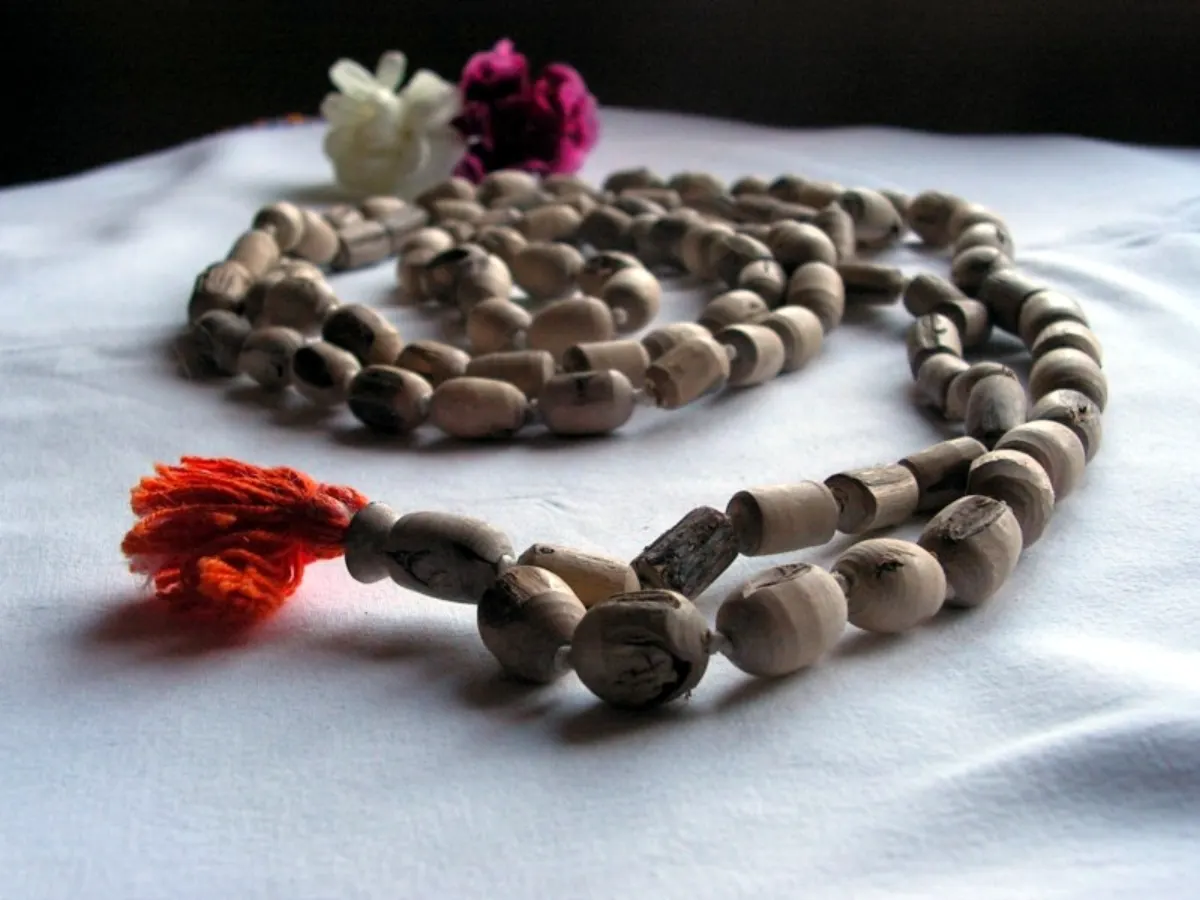
Tulsi, holy basil, is to Vaishnavas, the devotees of Vishnu and Krishna, what rudraksha is to Shaivas. Its wood is turned into beads; the plant itself is worshipped, and lamps are lit before it each evening in the month of Kartik. Vaishnavas are even known as "those who bear the tulsi around the neck", for the tulsi beads so many of them wear at the throat. A tulsi japa mala is the natural companion for the Hare Krishna Mahamantra and for Radha and Krishna naam.
स्फटिकSphatik: clear crystal
Sphatik malas are clear quartz crystal: cool to the touch, heavy for their size, and they click rather than tick against each other. In Tibetan practice, crystal and other clear or white beads, strung on white thread, are preferred for peaceful deity practices and purification.
चन्दनChandan and rakta chandan
Chandan is sandalwood, Santalum album, prized for its fragrance and held sacred in Hinduism. One detail is worth knowing: the fragrance is in the heartwood. The outer wood of the tree, the sapwood, has no scent at all, so a chandan mala that smells of nothing may simply be the wrong part of the tree.
Rakta chandan, red sandalwood, is a different tree altogether, Pterocarpus santalinus, known for its deep red colour. It grows naturally only in the southern Eastern Ghats of South India, and it is listed as endangered, with much of the wood on the market smuggled. If you buy a rakta chandan mala, ask where it came from.
कमलKamal gatta: lotus seed
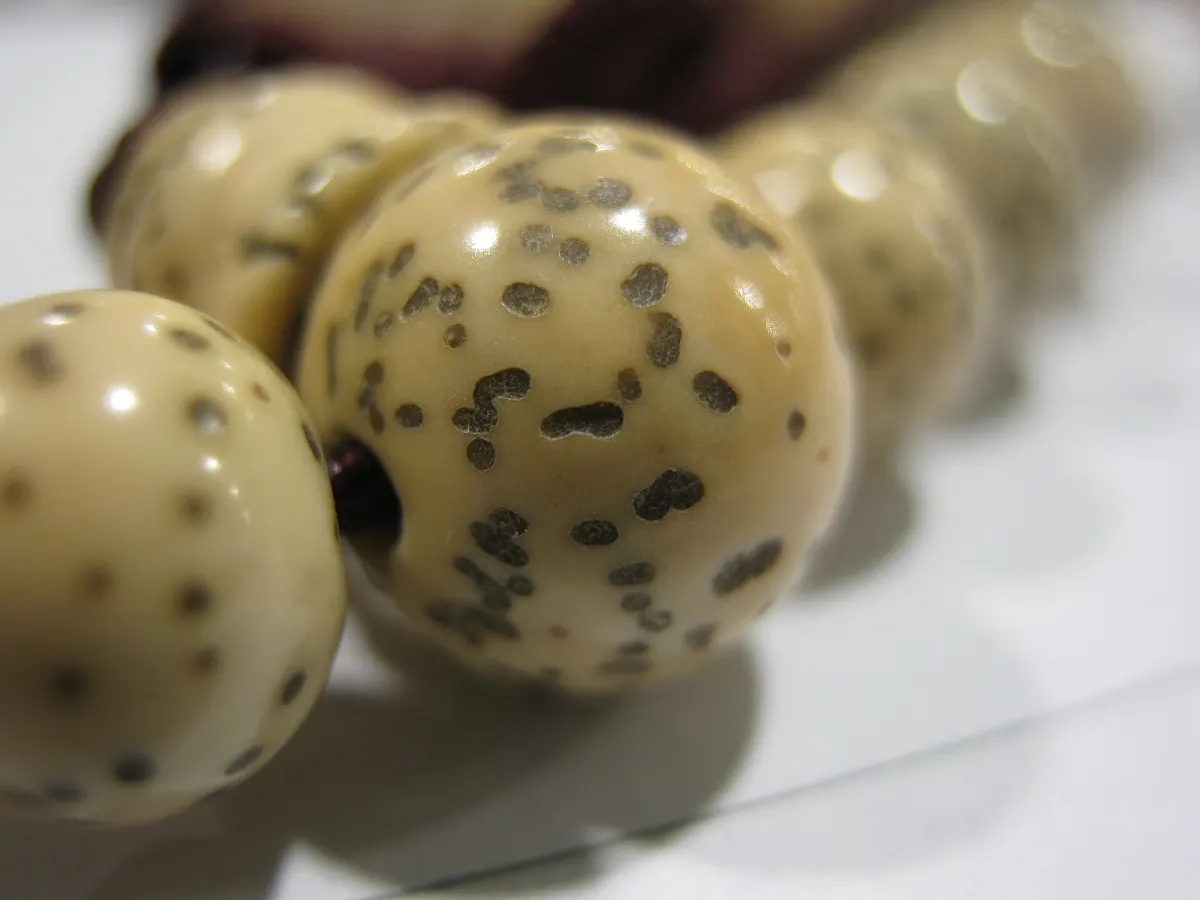
Kamal gatta beads are the seeds of the sacred lotus, Nelumbo nucifera, the kamala of Sanskrit. They are among the longest-lived seeds known: the oldest lotus ever germinated grew from a seed about 1,300 years old, found in a dry lakebed in China. It is hard to think of a better image for a practice meant to outlast a lifetime.
Does the material matter?
For your tradition, often yes: a Shaiva will reach for rudraksha and a Vaishnava for tulsi, and some mantras are traditionally paired with a particular mala. For the practice itself, what matters most is that the mala is yours, used for japa and kept with care. Some people keep one mala for japa only, in a bead bag, and wear another.
The seven malas in Japo
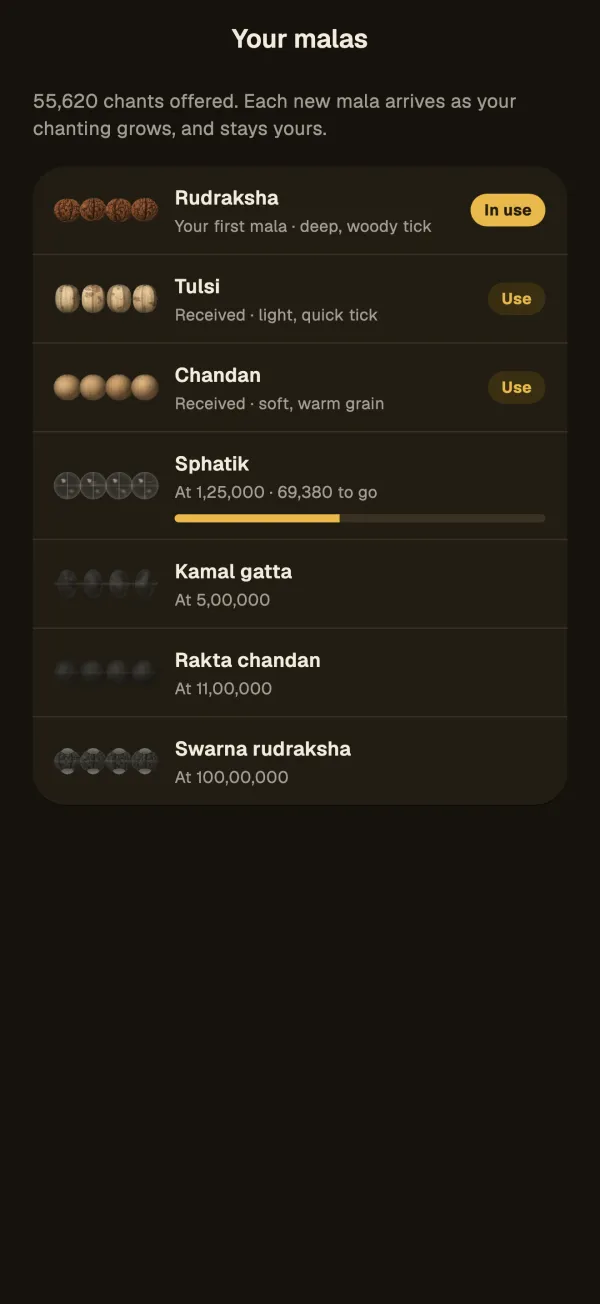
Japo's counter starts with rudraksha. With Japo Plus, six more arrive as your lifetime chanting grows, each at a count from japa tradition, and each with its own feel under the thumb.
| Mala | Arrives at | How it feels in Japo |
|---|---|---|
| Rudraksha | Your first bead | Deep, woody tick |
| Tulsi | 1,008 chants | Light, quick tick |
| Chandan | 10,800 | Soft, warm grain |
| Sphatik | 1,25,000 (sava lakh) | Crisp, glassy click |
| Kamal gatta | 5,00,000 | Round, deep tap |
| Rakta chandan | 11,00,000 | Dense, firm grain |
| Swarna rudraksha | 1,00,00,000 (one crore) | Rudraksha with a bright edge |
Frequently asked questions
Which mala is best for japa?
The one your tradition uses: rudraksha for Shaiva mantras, tulsi for Vaishnava ones, and crystal or sandalwood where your teacher suggests it. If you have no tradition to follow, rudraksha and tulsi are the most widely used.
What is a mukhi rudraksha?
Mukhi means face: the number of natural clefts that divide the bead. Most rudraksha have between 1 and 21. Beads with rare counts are prized, but a japa mala can be strung from ordinary ones.
Why does my chandan mala have no scent?
Sandalwood's fragrance is in the heartwood. Beads cut from the outer sapwood have none.
Is red sandalwood the same as sandalwood?
No. Rakta chandan is Pterocarpus santalinus, a different, endangered tree from South India. Ordinary chandan is Santalum album.
Sources
- Rudraksha, Wikipedia (checked October 2026)
- Japamala, Wikipedia (checked October 2026)
- Ocimum tenuiflorum (tulsi), Wikipedia (checked October 2026)
- Santalum album (sandalwood), Wikipedia (checked October 2026)
- Pterocarpus santalinus (red sandalwood), Wikipedia (checked October 2026)
- Nelumbo nucifera (lotus), Wikipedia (checked October 2026)
Begin your next mala.
Japo is a japa counter that feels like the real thing. Pull a bead with your thumb, feel a soft tick, and pick up exactly where you stopped. Counting, history and goals are free.